Business travel statistics indicate that 2026 is a record-breaking year for the global travel industry. As corporate spend enters a new era of “purposeful travel,” the focus has shifted from mere volume to high-impact ROI and employee well-being.
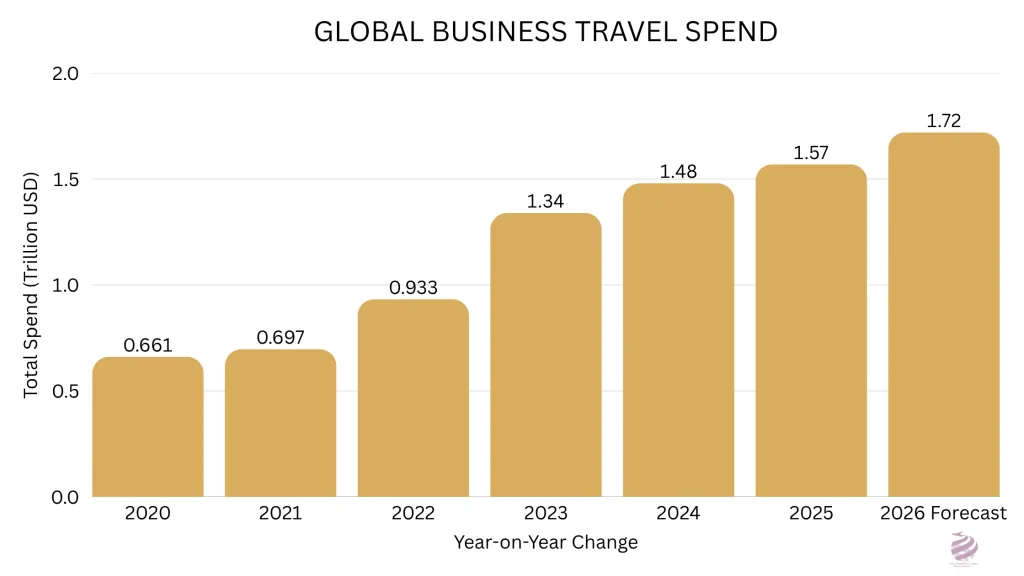
What are the key business travel statistics for 2026? Global business travel spend is projected to reach $1.72 trillion in 2026. The APAC region accounts for 42% of that spend. 60% of trips now include a leisure component (“bleisure”), 92% of TMCs use AI-driven analytics, and 72% of European companies now mandate rail for short-haul routes.
In this guide, we break down the data points every travel manager, CFO, and HR director needs to navigate the current landscape effectively.
The Macro View: Global Spend Hits New Heights
The global business travel market has officially moved past the recovery phase and into a period of sustained growth. According to the latest GBTA (Global Business Travel Association) reports, the industry is on track to surpass previous peaks significantly.
- Total Market Value: Global spend is projected to reach $1.72 trillion by the end of 2026.
- Regional Leaders: The Asia-Pacific (APAC) region continues to lead growth, accounting for 42% of total global spend.
- Budget Increases: 48% of enterprise-level companies report an increase in travel budgets compared to 2025.
2026 Pricing Forecasts: Air, Hotel, and Ground
Navigating costs requires a deep understanding of current business travel statistics regarding vendor pricing. While the volatility of the early 2020s has subsided, “sticky” inflation keeps rates slightly elevated.
- Airfares: Expect a modest increase of 1.2% to 1.8% globally. However, premium cabin demand remains at an all-time high as companies prioritize traveler comfort for long-haul flights.
- Hotel Rates: Average Daily Rates (ADR) are expected to rise by 3.5%. To combat this, 60% of travel managers are shifting toward “dynamic pricing” models with preferred hotel partners.
- Ground Transportation: Car rental costs are stabilizing, but the demand for electric vehicles (EVs) has seen a 25% YoY increase in corporate bookings.
How Technology and AI are Shaping Business Travel Statistics
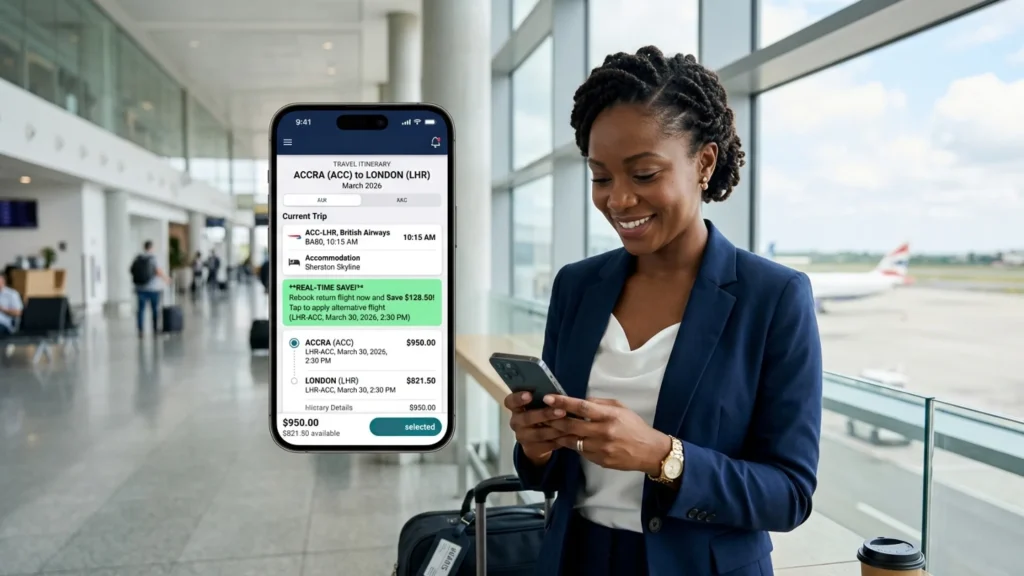
AI is no longer a futuristic concept; it is the backbone of modern travel management. In 2026, “Agentic AI”, AI that can take action rather than just suggest options, is the primary driver of efficiency.
- Adoption Rates: 92% of Travel Management Companies (TMCs) now utilize AI-driven predictive analytics to find the lowest fares before they are even published.
- Zero-Touch Booking: 40% of all corporate domestic bookings are now “zero-touch,” meaning they are completed without any human intervention via automated policy-compliant tools.
- Expense Reduction: Companies utilizing AI for expense reconciliation have reported a 30% reduction in processing costs.
For more on the digital shift, check out McKinsey’s latest report on AI in Travel.
The “Bleisure” Boom and Employee Retention
The lines between work and life have never been more blurred. Modern business travel statistics show that offering flexible travel policies is now a key tool for HR retention.
- The 60% Rule: Currently, 60% of all business trips include a leisure component (often called “Bleisure” or “Blended Travel”).
- Gen Z Influence: 88% of Gen Z employees state they are more likely to stay with a company that allows them to extend business trips for personal travel.
- Average Duration: The average business trip length has increased from 2.8 days in 2019 to 4.2 days in 2026.
Sustainability: The New ESG Mandate
Sustainability is no longer a “nice-to-have” in your travel program. It is a regulatory requirement for many.
- The Modal Shift: In Europe and parts of the US, 72% of companies now mandate rail travel for any trip under 300 miles.
- Carbon Budgeting: 1 in 4 large corporations has implemented a “Carbon Budget” alongside their financial budget to meet 2030 ESG targets.
- Green Lodging: 55% of travel managers now prioritize hotels with verified Global Sustainable Tourism Council (GSTC) certification.

Duty of Care: Safety is Non-Negotiable
Finally, traveler safety remains the top priority for 2026. The latest business travel statistics emphasize the “human cost” of travel.
- Traveler Confidence: 91% of employees say they feel “very safe” traveling when their company uses a real-time traveler tracking system.
- Risk Management: Spending on “Duty of Care” technology has increased by 15% this year as companies prepare for geopolitical and climate-related disruptions.
- Mental Health: 35% of travel policies now include “wellness stipends,” covering things like airport lounge access or gym memberships while on the road.
Conclusion: Data-Driven Decisions Win
As we have seen in these business travel statistics, the industry in 2026 is smarter, greener, and more traveler-centric than ever before. To stay competitive, companies must leverage AI and Corporate Travel Management partners like Kharis Hospitality & Logistics to control costs while embracing the “bleisure” trend to keep their best talent happy.
The most successful travel programs this year aren’t the ones that spend the least; they are the ones that spend the most effectively.