
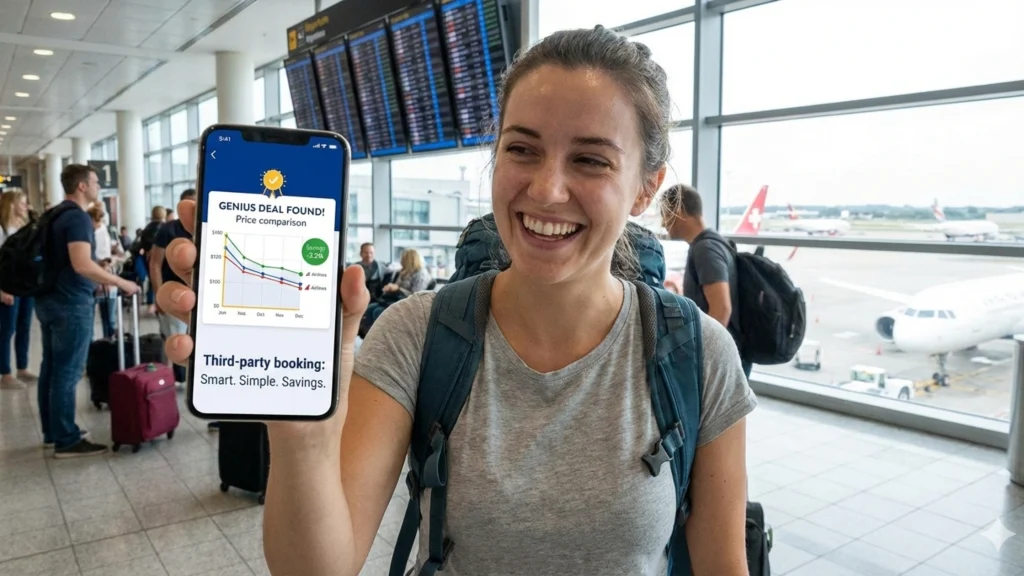
In the world of travel, there is an age-old debate that divides frequent flyers: Should you book directly with the airline, or use a third-party Online Travel Agency (OTA)? While airline purists will tell you to always go direct, dismissing aggregators is a mistake that could cost you hundreds of dollars and limit your travel options.
The reality of modern flight booking is complex. It isn’t 2005 anymore; third-party platforms like Expedia, Skyscanner, Hopper, and Kiwi.com have evolved into sophisticated tech powerhouses. They offer tools, guarantees, and pricing algorithms that individual airlines cannot easily compete with.
If you are looking to master the art of travel hacking, you need to understand when and why an aggregator is your best friend. Here is why using third-party flight booking services for your next flight booking might just be the smartest travel decision.
The Evolution of Online Flight Booking
Before diving into the specific reasons, it is crucial to understand the landscape. When you engage in flight booking through a site like Kayak or Priceline, you aren’t just buying a ticket; you are accessing a Global Distribution System (GDS). These platforms scrape data from hundreds of carriers instantly to present options that a single airline website would never show you.
While direct booking has its perks (mostly regarding customer service during cancellations), the modern traveler needs flexibility and value. This is where third-party platforms shine.
1. Access to “Hacker Fares” and Interlining
The single most significant advantage of third-party flight booking is the ability to mix and match airlines. This is often called “interlining” or utilizing “hacker fares.”
When you book directly on an airline’s website, they will only show you itineraries that use their planes or their specific alliance partners. They have no incentive to tell you that flying out with KLM and flying back with is $200 cheaper.
How It Works
Third-party engines treat each leg of your journey as a separate puzzle piece. They might pair a legacy carrier for the long-haul leg with a budget regional carrier for the short connection.
- Virtual Interlining: Platforms like Kiwi.com specialize in this. They sell you two separate tickets (e.g., Delta and Ryanair) in a single transaction, often covering the connection risk with their own guarantee.
- Cost Savings: This method can result in savings of up to 40% compared to a standard round-trip ticket on one carrier.
If your primary goal with flight booking is cost reduction, third-party algorithms are unbeatable.
2. The Bundling Effect: More Than Just a Seat
One area where third-party flight booking historically outperform airlines is in package deals. The genius of using an OTA (Online Travel Agency) lies in its vast inventory of non-flight products.
Because these platforms have massive negotiating power with hotel chains and car rental agencies, they can create opaque pricing bundles. This means the price of the flight booking is hidden within a total package cost, allowing the airline to offload seats at a discount without publicly advertising a low fare (which would anger their full-price customers).
The Math of Bundling
Consider a trip to Paris.
- Direct Booking: Flight ($900) + Hotel ($600) = $1,500.
- OTA Bundle: Flight + Hotel = $1,250.
By keeping your entire itinerary under one roof, you often unlock “private rates” that aren’t available if you search for the flight and hotel separately. For travelers planning a full vacation, this consolidated approach to flight booking is a no-brainer.
3. Superior Price Prediction and Freezing Tools
Airlines generally want you to book now. Their interfaces are designed to create urgency. Conversely, third-party apps like Hopper and Skyscanner focus on data analytics to help you time the market.
These platforms analyze billions of historical flight prices to predict whether a fare is likely to rise or fall in the coming weeks.
Why This is a “Genius” Strategy
- Price Freezing: Some third-party apps allow you to pay a small deposit to “freeze” a price for a specified period. If the price goes up, you pay the frozen price. If it goes down, you pay the lower price. Airlines rarely offer this flexibility on standard economy tickets.
- Watchlists: You can get alerts for a specific route and receive notifications the second the price drops.
Leveraging these third-party tools transforms flight booking from a guessing game into a data-driven investment.
4. The “Everywhere” Search Feature
Sometimes, you want to travel for vacation, but you don’t care where, you just want to go where your budget takes you. Airline websites are terrible at this. They usually require you to input a specific destination.
Third-party engines have mastered the “open-ended” search. Skyscanner’s “Everywhere” search or Google Flights’ “Explore” map are powerful tools for the adventurous traveler.
Unlocking Serendipity
By entering your home airport and selecting “Everywhere” or “Anywhere,” the flight booking engine ranks every destination in the world by price. You might discover that it’s cheaper to fly to Costa Rica than to Florida for your dates. This feature alone makes third-party aggregators essential for digital nomads and flexible vacationers.
5. Agnostic Loyalty Rewards Programs
Frequent flyer miles are great, but they lock you into a specific airline or alliance. If you are loyal to American Airlines, you might ignore a cheaper, better flight on Virgin Atlantic just to get the points.
Third-party flight booking platforms have solved this with their own agnostic loyalty programs.
- Expedia OneKey: Earn cash back that can be used on flights, hotels, or cars, regardless of the brand.
- Orbitz Rewards: Earn “Orbucks” immediately on flights that can be redeemed instantly on hotels.
The Double-Dip Strategy
In many cases, you can enter your frequent flyer number into the third-party booking flow. This allows you to earn the airline’s miles plus the OTA’s rewards points. This “double-dip” turns a standard flight booking into a wealth-generating event for your points balance.
6. Access to Niche and Regional Budget Carriers
A common misconception is that major search engines cover all airlines. However, booking directly with a major carrier often blinds you to smaller, regional options.
Aggregators often have API connections with small, budget airlines that don’t list on major alliance websites. For example, if you are traveling through Southeast Asia or Europe, carriers like AirAsia or EasyJet might not appear on a legacy carrier’s “partner” list.
A robust third-party flight booking search scrapes these budget carriers, offering you a complete picture of the market. This ensures you aren’t paying a premium simply because you didn’t know a cheaper regional competitor existed.
7. User Experience and 24-Hour Cancellation Windows
Let’s be honest: many airline websites are clunky, outdated, and difficult to navigate. Third-party tech companies prioritize User Experience (UX) above all else. Their interfaces are cleaner, faster, and easier to filter (by duration, number of stops, departure time, etc.).
Furthermore, many third-party sites offer a generous 24-hour cancellation policy for flight booking, even on fares where the airline might be stricter. While the US Department of Transportation mandates a 24-hour rule for bookings made directly with airlines (for travel 7+ days out), many OTAs extend this courtesy globally or offer “flexible cancellation for any reason” add-ons that provide cash refunds rather than restrictive airline vouchers.
When to Be Careful (The Nuance)
To maintain a balanced perspective, it is important to note that third-party flight booking isn’t perfect for every scenario. If you anticipate needing to change your flight dates frequently or are booking a complex itinerary with special needs (like traveling with a pet or unaccompanied minors), dealing directly with the airline can sometimes streamline communication.
However, for the vast majority of leisure travelers looking for the best price, route, and convenience, the third-party route is superior.
Conclusion: Travel Smarter, Not Harder
The landscape of flight booking has shifted. It is no longer a choice between “safe and expensive” (direct) or “risky and cheap” (third-party). Today, third-party services have sophisticated technology, price protection, and itinerary combinations that airlines simply cannot match.
By utilizing these platforms or third party flight booking services, you are leveraging data, flexibility, and competition to your advantage. You aren’t just a passenger; you are a savvy consumer.
Ready to book your next adventure?
Don’t settle for the first price you see. Contact Kharis Hospitality & Logistics to make your next flight booking a genius move.